
African Tech Has Global Ambitions. So Why Is International Expansion Still So Difficult?
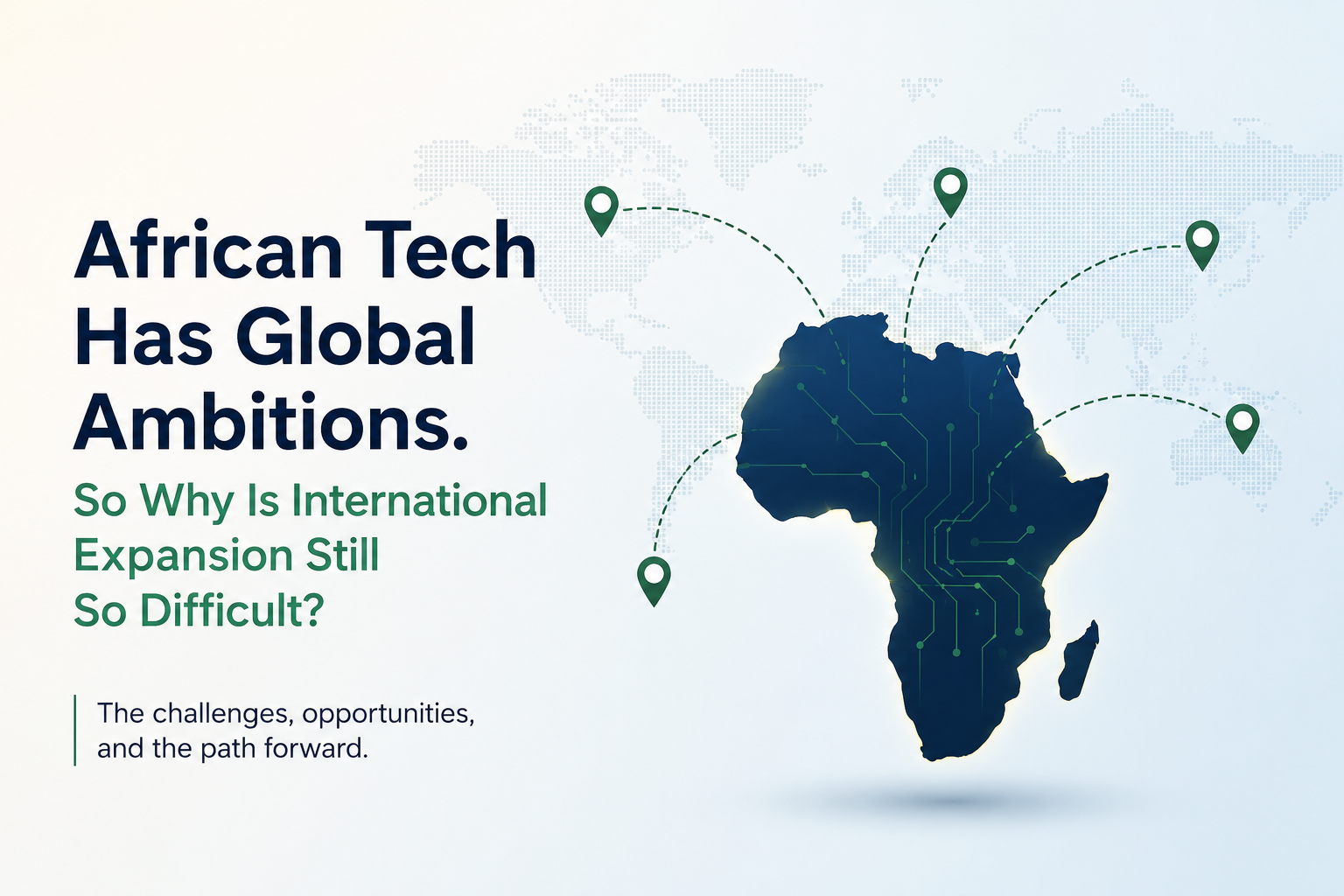
One of the most interesting conversations I heard while attending the 10th edition of Africa Tech Summit London at the end of May centred on a question that continues to shape the future of the continent's innovation ecosystem: why is it still so difficult for African technology companies to expand beyond Africa?
At first glance, the question feels surprising. African fintechs, software companies, and digital platforms have built solutions that address some of the world's most complex challenges. From mobile money and digital payments to cross border finance and financial inclusion, African innovators have repeatedly demonstrated their ability to create scalable solutions in demanding environments.
Yet despite these successes, relatively few African technology companies have achieved significant scale outside the continent.
The ambition certainly exists. The opportunity is clear. The challenge lies in the journey.
The Funding Gap Starts at Home
One of the biggest obstacles to international expansion begins long before a company books its first flight overseas.
Investment across Africa remains heavily concentrated in a handful of markets. Nigeria, Kenya, South Africa, and Egypt continue to attract the majority of venture capital funding. Companies operating outside these ecosystems often face a tougher path to securing the resources needed to scale.
For many investors, familiarity matters. Larger markets offer stronger visibility, established networks, and a greater number of success stories. Smaller markets may produce innovative companies, but they often struggle to attract the same level of investor confidence.
The result is that many promising businesses spend valuable time proving not only their business model but also the attractiveness of the market they operate in.
International expansion requires capital, patience, and long term planning. Many companies are still fighting to secure those foundations before looking abroad.
Regulation Remains a Global Challenge
Technology may move quickly, but regulation rarely follows at the same pace.
Expanding into a new country often means navigating licensing requirements, compliance frameworks, tax obligations, and financial regulations that differ significantly from one market to another.
For fintech companies in particular, regulatory approval can be one of the most expensive and time consuming parts of expansion.
Many African startups have already learned how to operate within complex domestic regulatory environments. The challenge emerges when those requirements multiply across multiple jurisdictions.
It is difficult enough to understand one rulebook. Understanding five at the same time is a task that would test even the most experienced legal teams.
Building Trust Beyond Familiar Markets
Another challenge is visibility.
Many African technology companies have built strong brands within their home markets but remain relatively unknown internationally. Expanding into new regions often requires companies to establish credibility with customers, partners, regulators, and investors who may have limited knowledge of the African technology ecosystem.
This is gradually changing.
The growing presence of African fintech firms in markets such as the United Arab Emirates, Saudi Arabia, Brazil, India, and Mexico demonstrates that global interest in African innovation is increasing. However, trust is not built overnight.
Partnerships, local representation, and consistent market engagement remain essential ingredients for success.
African Innovation Is Global in Nature
What makes this conversation particularly fascinating is that African technology companies are not struggling because their products lack relevance.
In many cases, the opposite is true.
The challenges that African fintechs have spent years solving, including inflation, currency volatility, financial exclusion, and inefficient payment systems, also exist in many emerging economies around the world.
This creates a significant opportunity. Solutions developed in Lagos, Nairobi, Accra, or Cairo can often address similar problems in Latin America, the Middle East, and parts of Asia.
The technology travels well. The business environment is often the harder part.
A New Era of Global Expansion
There are encouraging signs that the landscape is changing.
Growing interest from Gulf investors, stronger cross border partnerships, improved digital infrastructure, and greater recognition of African innovation are creating new pathways for international growth.
More African companies are viewing themselves not simply as regional players but as global businesses with expertise that can be applied far beyond the continent.
The next generation of African technology champions is likely to emerge from organisations that combine local understanding with international ambition.
Conclusion
The challenge facing African technology companies is not a lack of innovation, talent, or ambition. Those qualities are abundant across the continent.
The real challenge lies in accessing capital, navigating regulation, building international trust, and scaling operations across unfamiliar markets.
The encouraging news is that these barriers are not permanent. As investors, policymakers, and ecosystem leaders become more aware of the value being created across Africa, the path to international expansion should become more accessible.
The conversation at Africa Tech Summit London made one thing clear: African technology has already proven it can solve global problems. The next chapter is ensuring more African companies have the opportunity to compete on a truly global stage.
If your B2B tech project wants to navigate the B2B tech media landscape with clarity and impact, I help teams develop cost-effective and results-driven communication strategies that combine PR, social media and SEO. Get in touch if you want to elevate your message, reach the right audiences and build sustainable growth in a rapidly evolving market.
Let’s have a chat : lekeapena@thenextmachinecomms.com