
Tokenize:London Day 1 — My Key Takeaways From a Packed First Day
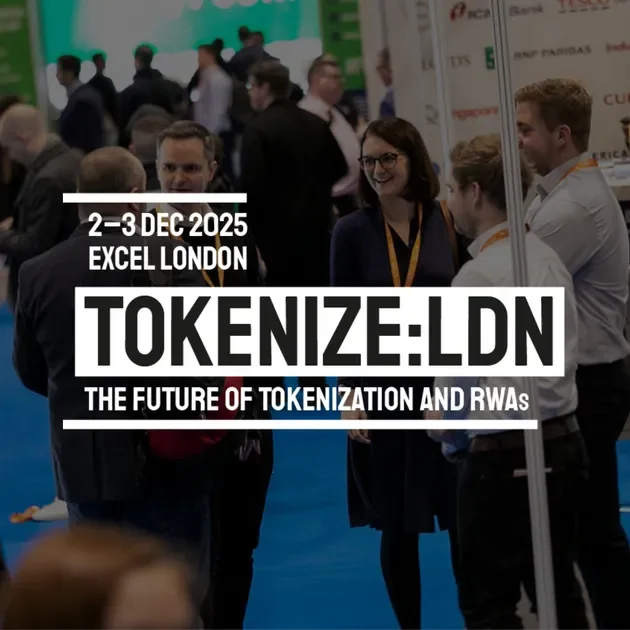
This year’s Tokenize:London kicked off with a strong dose of realism, ambition, and genuinely insightful debate about where tokenization and digital assets are heading. Here’s a breakdown of the sessions I attended and what stood out.
Session 1 — Chair’s Welcome: The Future of Money
Jonny Fry opened the day with a macro sweep of the shifting financial landscape. Cash continues its decline, and governments are exploring CBDCs at an accelerating rate — with 93% of central banks already running CBDC projects.
He drew sharp contrasts between CBDCs, stablecoins, and tokenized deposits, arguing that stablecoins aren’t IOUs but “securities backed by something tangible.” He emphasized that traditional rails like SWIFT are outdated, and stablecoins help eliminate unnecessary intermediaries — especially relevant in Europe, where many are uneasy about relying on U.S.-controlled payment systems.
His headline insight? As more assets become tokenized, AI will increasingly manage money, reflecting the already-dominant role algorithms play in today’s markets. Stablecoins won’t replace cash, but they will offer people new ways to control and transfer value.
Session 2 — Bridging the RWA Infrastructure Gap
This panel tackled the realities of scaling real-world asset (RWA) tokenization.
Prab Bajwa (State Street) underlined that institutional appetite is rising, but legal/regulatory clarity remains the biggest bottleneck. Privacy, digital identity, and institutional-grade security are unresolved issues. Trust and credible custodians will be key to bringing large pools of capital on-chain.
Ludovico Rossi (Brickken) highlighted rising demand for tokenized commodities and funds. For him, the major blockers are liquidity and the need for a fully integrated solution (settlement, custody, onboarding). The “real unlock,” he argued, will be seamless DeFi collateralization of tokenized assets.
Neale Croutear-Foy (Propchain) stressed the complexity of tokenizing real estate. With each country running different property systems, standardization of data is critical. The UAE’s government-backed digital real estate efforts are setting an example.
Overall: the technology is here — but trust, privacy, data standards, and better liquidity need to catch up.
Session 3 — Tokenized Assets Regulation: State of Play
Jacob Turner (Citi) outlined the regulatory inconsistencies across jurisdictions, from the U.S. Howey test to Europe’s MiCA classifications. One major focus was custody: how do we ensure digital assets are properly segregated in insolvency events?
Andrew Whitworth (Global Policy Ltd) added that regulators still disagree on who should lead tokenization policy — government or industry. Stablecoins are already here, he noted, but CBDCs aren’t. The big question is not if regulation comes, but whether it will be good regulation.
Session 4 — How Stablecoins Improve Liquidity for Tokenized Assets
Geoffrey Kendrick, Standard Chartered
Kendrick argued that stablecoins are the first true breakthrough of blockchain technology. He expects massive dollarization in emerging markets, with treasuries increasingly embracing stablecoins to reduce costs and inefficiencies.
Stablecoins now serve as major savings vehicles, and Kendrick forecasts tokenized RWAs to surge from $35bn today to $2tn by 2028 — a 57x jump.
Session 5 — The Key to Raising Institutional Funding for RWAs
Across the panel, one theme dominated: institutions need liquidity, finality, and clarity.
Patrick Barrett (MembersCap) noted banks will fully embrace tokenization only when it becomes more profitable than legacy products.
Richard Green (Rootstock) emphasised that RWAs must “speak TradFi language,” offer smart contract insurance, and provide liquidity beyond Bitcoin.
Vinay Anupindi (Monee Fintech) pointed out that institutions demand settlement finality and seamless interoperability with legacy systems — two areas still lacking.
Session 6 — Fractional Ownership & Democratizing Property Investment
Lisa Cameron, Former MP
Cameron shared stories from Parliament that highlighted the education gap around digital assets — from MPs unfamiliar with Web3 to children recognising its importance instantly.
She sees fractional property ownership as a key opportunity to open up the housing ladder and highlighted work from companies like Propshare and Codelab. The UK is now collaborating with regulators in Dubai, the U.S., and Europe to catch up.
Session 7 — AI, Data & the Future of Digital Assets
Berdellans closed with a compelling vision of blockchain as the “trust layer” for AI. By anchoring data hashes on-chain, companies can verify how and where AI made decisions — crucial as data rot becomes a real systemic risk.
His message: AI alone isn’t the revolution — the revolution is AI + blockchain + decentralized data.