
Real Madrid’s Crisis Is Becoming a Masterclass in How Not to Manage Reputation
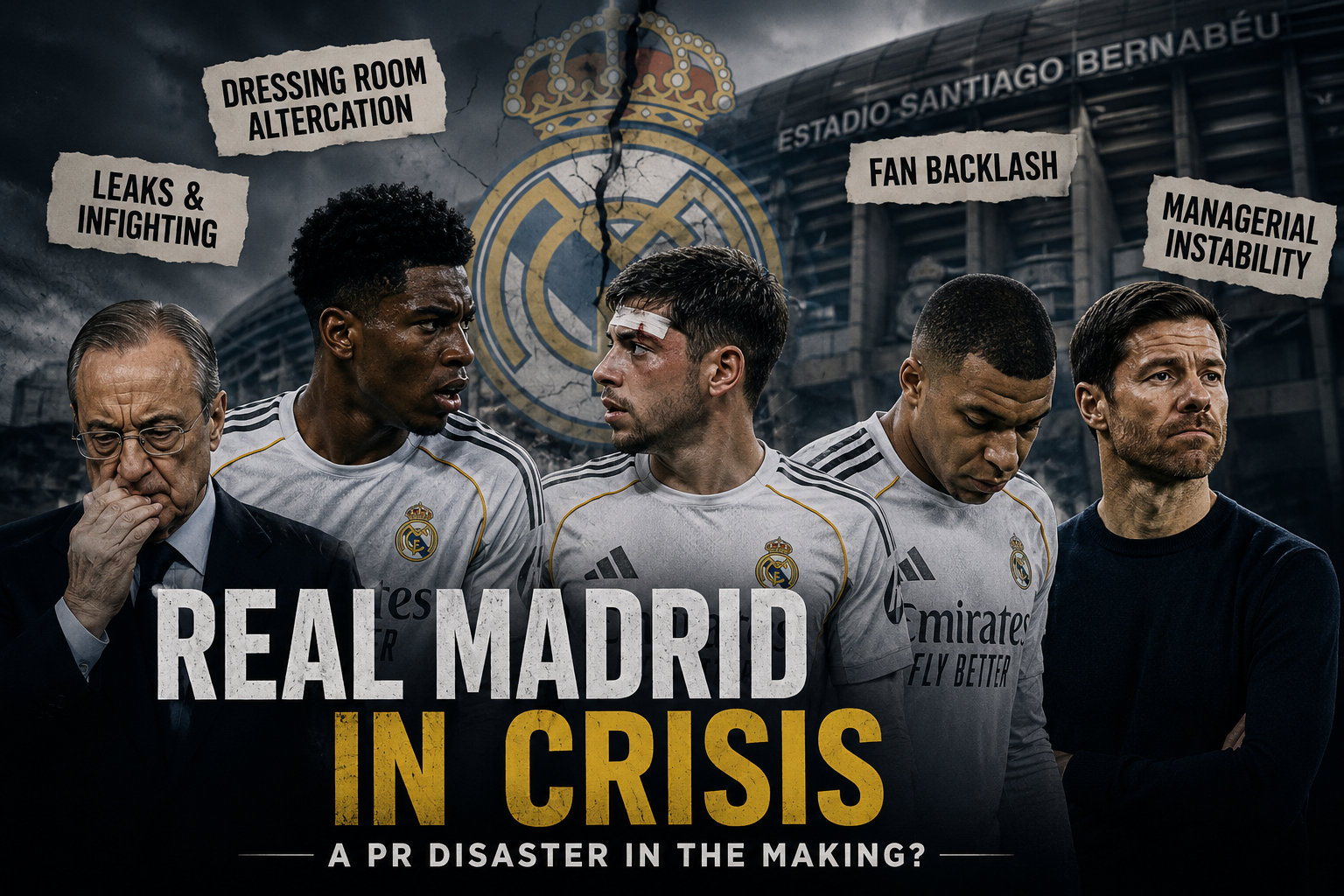
I should probably start by saying I’m a fairly casual football fan. I watch the big games, keep an eye on the headlines, and like most people, I grew up seeing Real Madrid as European football’s untouchable superpower. The glamour club. The serial winners. The institution that somehow always found a way to project control, even in difficult moments.
But over the last few years, some of that shine has faded. And their recent crisis feels less like a footballing slump and more like a textbook example of poor crisis management.
Losing Control of the Narrative
One of the first rules of crisis communications is simple: control the narrative early or someone else will do it for you.
Real Madrid have failed spectacularly at this.
Over the last week alone, stories of dressing room fights, player factions, leaked disagreements, disciplinary investigations and internal mistrust have spilled into public view almost unchecked. Federico Valverde ending up in hospital after a confrontation with Aurélien Tchouaméni transformed what should have been a contained internal matter into an international spectacle.
The problem was not just the incident itself. Elite clubs survive internal conflict all the time. The problem was the club’s inability to communicate with clarity and consistency while leaks continued to dominate the media cycle.
When anonymous sources, social media speculation and fragmented player statements become the primary source of information, the organisation has already lost control.
Leadership Vacuums Always Become Public
Another classic crisis management principle is that uncertainty at leadership level inevitably amplifies instability elsewhere.
That seems painfully obvious at Madrid right now.
Reports of dressing room divisions, players openly challenging authority, and Xabi Alonso’s eventual departure all point towards a club struggling to establish clear internal leadership. Even the optics around Alonso’s exit mattered. Images of Kylian Mbappé apparently overruling his manager during the Super Cup final created the impression of a club where star players held more authority than the coaching staff.
Whether entirely fair or not, perception matters in PR almost as much as reality.
Real Madrid’s hierarchy also appeared reactive rather than proactive throughout the crisis. Emergency meetings, public disciplinary announcements and internal inquiries gave the impression of an organisation constantly responding to events rather than shaping them.
Reputation Is Built in Difficult Moments
What makes this particularly striking is that Real Madrid historically understood brand management better than almost any sports organisation in the world. They sold prestige as much as football.
That image is now under pressure because the club increasingly looks fractured, political and unstable. The leaks are perhaps the most damaging element of all because they suggest a complete breakdown in internal trust. Once stakeholders believe there are competing agendas inside an organisation, every story becomes harder to contain.
And football clubs, like corporations, rarely suffer reputational damage from one incident alone. It is usually the accumulation of smaller moments that creates the perception of institutional decline.
Bigger Than Football
The irony is that this may not even be primarily a football problem anymore. It feels cultural.
When organisations lose experienced leadership, allow internal tensions to fester publicly, and fail to communicate decisively during moments of scrutiny, reputational decline tends to accelerate quickly.
For years, Real Madrid looked immune to that reality.
Now they look like a case study in it.
So what could have Real Madrid done better?
What Real Madrid arguably needed most during this crisis was a far more disciplined and centralised communications strategy. Instead of allowing fragmented player statements, anonymous leaks and social media speculation to dominate the narrative, the club should have moved quickly to establish a clear line of communication from senior leadership.
One of the most important principles in crisis management is demonstrating visible control, even when internal issues are still being resolved privately. Rather than appearing reactive through emergency meetings and inconsistent messaging, the club could have projected stability by addressing the situation directly, confirming that internal matters were being handled professionally while discouraging further public commentary from players and affiliates. Once multiple voices begin competing publicly inside an organisation, the perception of disorder becomes almost impossible to contain.
The club also appears to have underestimated the reputational damage caused by the wider cultural issues surrounding the squad.
A crisis rarely becomes dangerous because of a single incident alone; it escalates when underlying tensions suggest deeper institutional problems. Reports of dressing room factions, weak leadership structures and players openly challenging authority created the impression of an organisation lacking cohesion at every level.
Real Madrid would have benefited from visibly reinforcing internal leadership earlier, particularly through respected senior figures capable of calming tensions behind the scenes and projecting unity publicly. In many ways, the biggest failure was not the altercation itself, but the sense that nobody inside the club truly looked in control of what happened afterward
If your DeFi or Web3 project wants to navigate this landscape with clarity and impact, I help teams develop cost-effective and results-driven communication strategies that combine PR, social media and SEO. Get in touch if you want to elevate your message, reach the right audiences and build sustainable growth in a rapidly evolving market.
Let’s have a chat : lekeapena@thenextmachinecomms.com