
Nigeria's Stablecoin Boom Is a Lesson for Africa and the West
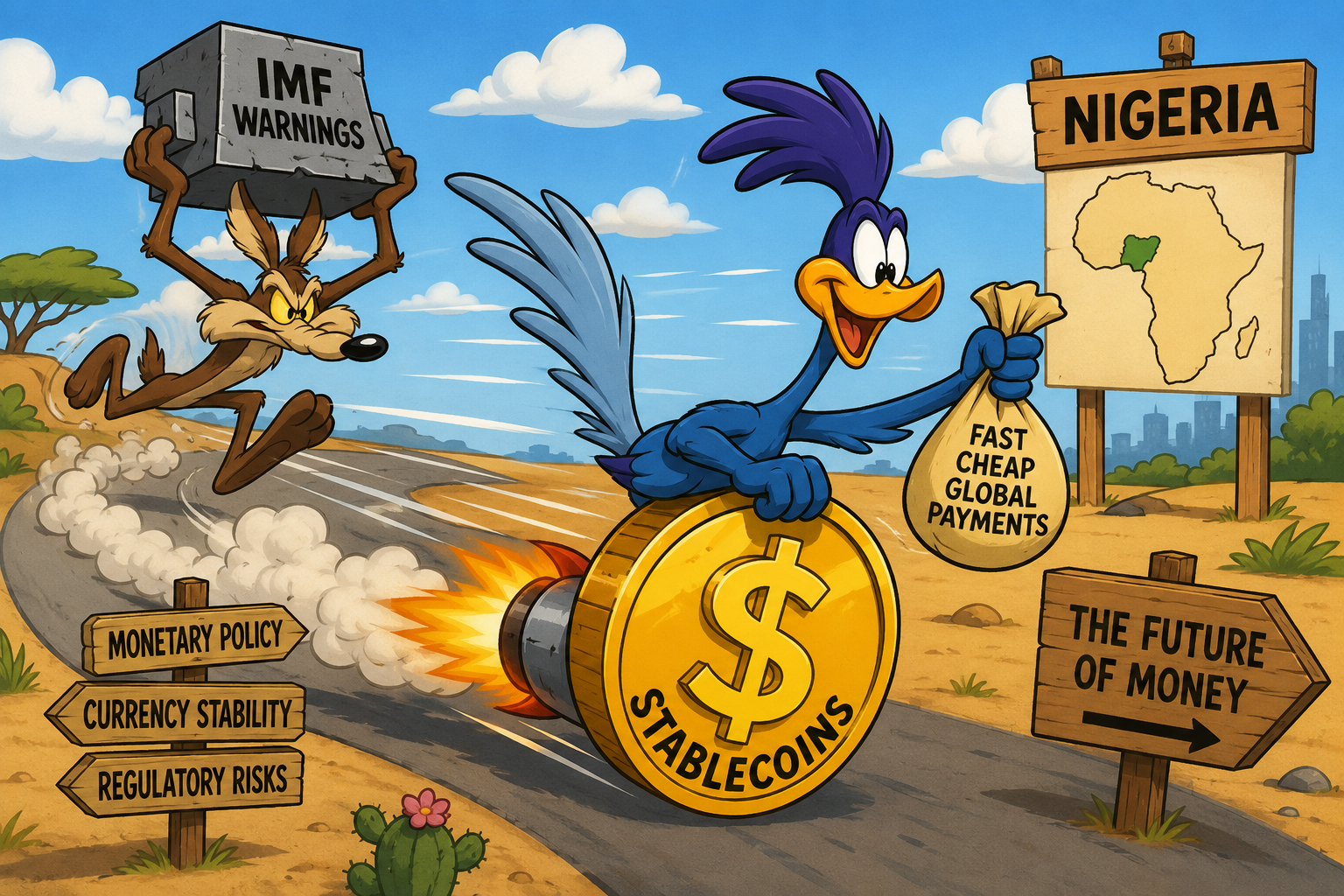
Recent warnings from the International Monetary Fund highlight just how significant stablecoin adoption has become in Africa's largest economy. Nigeria now accounts for roughly 60% of sub Saharan Africa's stablecoin inflows, with households and businesses increasingly using dollar backed digital assets for remittances, cross border payments and preserving value amid economic uncertainty.
While the IMF is right to raise questions about monetary policy and financial stability, Nigeria's experience also offers important lessons for both African markets and Western governments.
Stablecoins Are Solving Real Problems
One reason stablecoins have gained such traction in Nigeria is simple: they solve practical problems.
For many Nigerians, stablecoins provide faster access to dollars, cheaper cross border payments and a way to protect savings from currency depreciation. The IMF noted that Nigeria received approximately $59 billion in crypto asset inflows between July 2023 and June 2024 alone, underlining the scale of adoption.
This is not a story about speculation. It is a story about utility.
When sending money across borders remains expensive and foreign exchange access is constrained, people naturally seek alternatives that are faster, cheaper and more accessible.
The lesson for other African markets is clear. Stablecoins are emerging as financial infrastructure rather than purely digital assets.
The IMF's Concerns Should Not Be Ignored
At the same time, the IMF's warning deserves serious consideration.
The widespread use of dollar denominated stablecoins has the potential to reduce demand for local currencies and weaken the effectiveness of monetary policy. If businesses and consumers increasingly transact in digital dollars, central banks may find it harder to influence economic activity through traditional tools such as interest rates and money supply management.
The concern is particularly relevant in emerging markets where currency volatility remains a persistent challenge.
Yet Nigeria also demonstrates that attempting to suppress adoption rarely works. Despite previous restrictions on cryptocurrency activity, stablecoin usage continued to grow through peer to peer networks and digital platforms.
As a result, Nigerian policymakers are increasingly moving towards oversight and regulation rather than outright opposition.
What Western Governments Should Learn
Perhaps the most interesting lesson from Nigeria is one that policymakers in Europe and North America may not expect.
While regulators debate stablecoins, banks are racing to enter the market themselves. Across the United States and Europe, major financial institutions are developing stablecoins and tokenised deposit products as they seek to modernise payments and settlement systems.
The reason is straightforward. Stablecoins enable instant settlement, twenty four hour operations and programmable transactions that traditional payment infrastructure often struggles to provide.
Nigeria has shown what happens when consumers identify a genuine need for these capabilities. Adoption follows quickly.
The debate is therefore no longer about whether digital money will play a major role in the future financial system. The debate is increasingly about who will provide it.
Looking Beyond Nigeria
Nigeria's stablecoin boom is ultimately a glimpse into the future of finance.
It highlights the growing demand for faster payments, digital dollars and more accessible financial infrastructure. It also exposes the challenges regulators face when innovation moves faster than existing frameworks.
The next chapter may involve stablecoins, tokenised deposits, or a combination of both. What seems increasingly certain is that digital forms of money are becoming part of mainstream financial infrastructure.
The question is no longer whether stablecoins will influence the future of payments. The question is whether governments, banks and regulators can adapt quickly enough to shape where that future leads, both in Africa and far beyond.